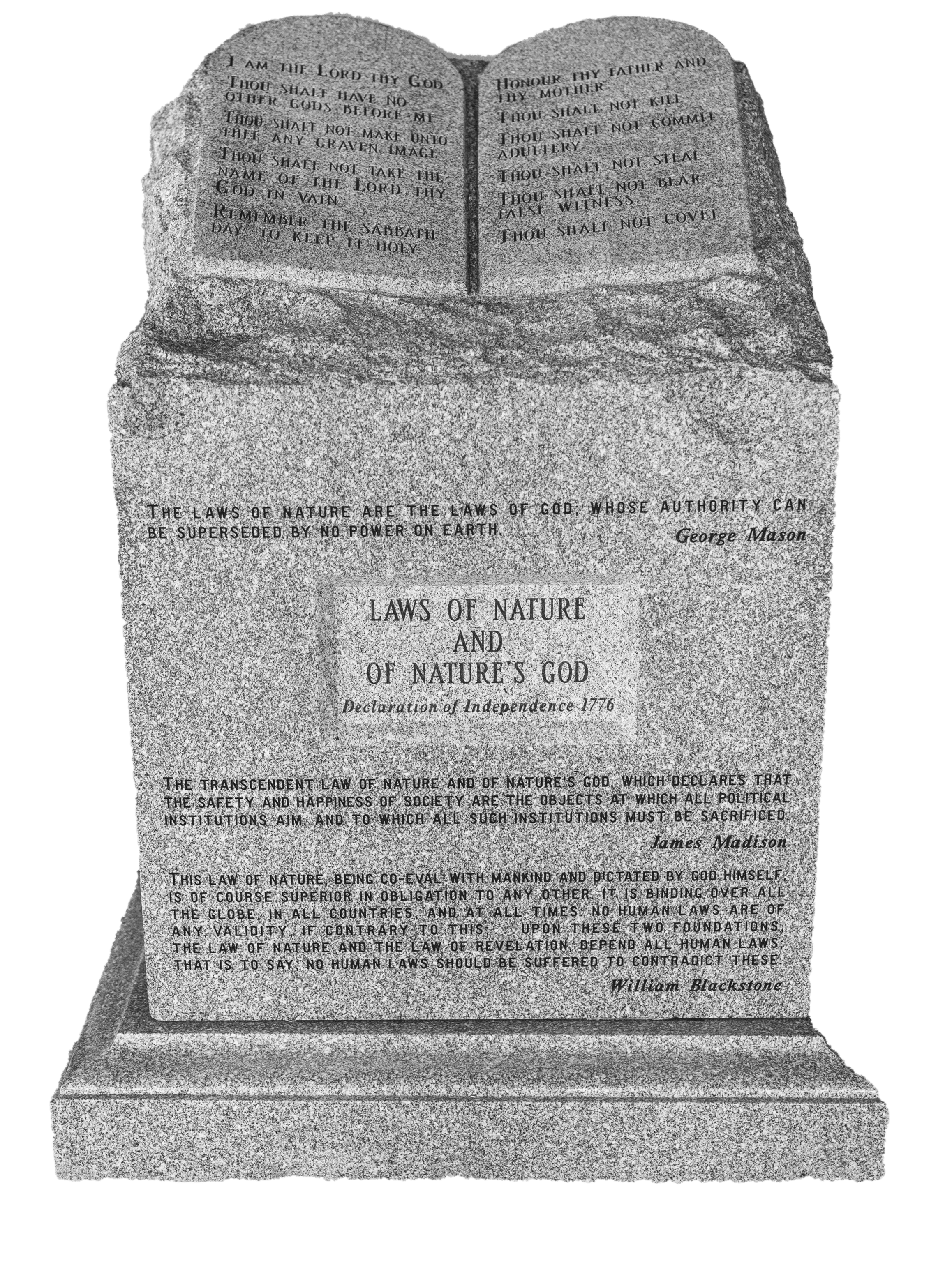
Foundation for Moral Law

Foundation for Moral Law
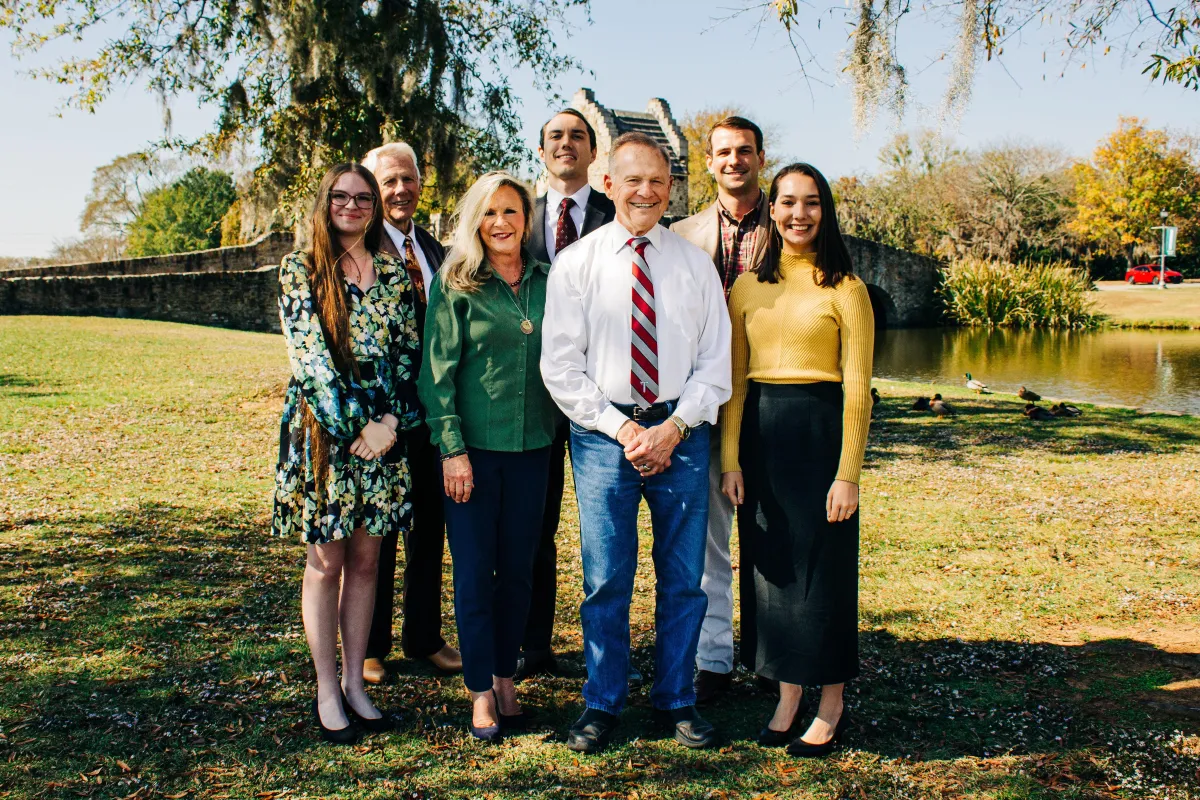
Defending our inalienable right to acknowledge God, the Foundation for Moral Law is an Alabama-based 501(c)(3) dedicated to preserving religious liberty and the strict interpretation of the Constitution according to the intent of its Framers.
Defending our inalienable right to acknowledge God,
the Foundation for Moral Law is a Montgomery-based 501(c)(3) dedicated to preserving religious liberty and the strict interpretation of the Constitution according to the intent of its Framers.
Stay updated on the cases we are working and those we are watching
News and Updates

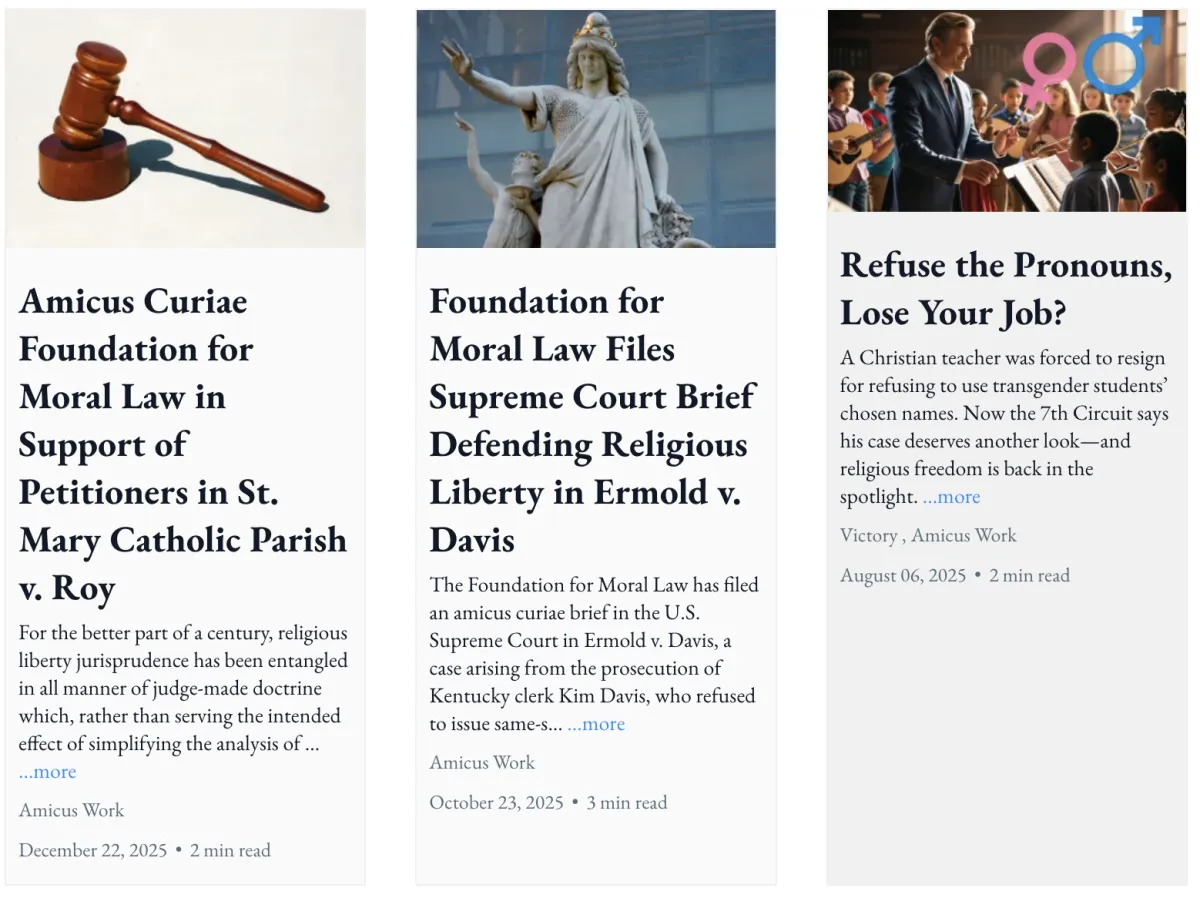
Amicus Curiae Foundation for Moral Law in Support of Petitioners in St. Mary Catholic Parish v. Roy
For the better part of a century, religious liberty jurisprudence has been entangled in all manner of judge-made doctrine which, rather than serving the intended effect of simplifying the analysis of Establishment and Free Exercise claims, has led to more confusion, more contention, and ultimately more injury to religious liberty. Though this Court recently declared in Kennedy v. Bremerton School District that Establishment Clause claims must be analyzed in “accord with history and faithfully reflect the understanding of the Founding Fathers,” Free Exercise jurisprudence remains unmoored from its original meaning, and religious liberty in America will continue to be subject to blatant infringement until this is remedied.
However, the Founders’ understanding of both the Establishment and Free Exercise Clauses—that they enshrine a jurisdictional separation between Church and State—alleviates these issues. To modern minds, the Founders’ understanding can seem no less confusing. However, both the Founders’ own words and actions as well as this Court’s early religious liberty jurisprudence provide picture-perfect clarity of the Founders’ intent and understanding of the Religion Clauses.
As this Court affirmed in 1878 upon striking down polygamous marriage in Reynolds v. United States, the Founders recognized, understood, and enshrined a jurisdictional separation between Church and State, such that the only time that the State has any authority at all over the Church is if and when the Church’s actions, as phrased by Thomas Jefferson, are “overt acts against peace and good order.”
In the present case, Colorado excludes Catholic preschools from its Universal Preschool Program unless they agree to operate on terms that conflict with Catholic doctrine regarding marriage, sex, and gender. Catholic preschools cannot accept those conditions without altering religious formation and internal governance—matters the Founders understood to lie beyond civil authority. Colorado does not justify its exclusion as necessary to prevent disorder, coercion, violence, or any “overt act against peace and good order.” Instead, the State seeks to leverage a public program to pressure religious schools to conform to state orthodoxy. Under the Founders’ jurisdictional framework, that is the beginning and end of the Free Exercise violation: civil authority is exercising power where it has none and has thus violated the Constitution.
Returning to the Founders’ framework of jurisdictional separation would reorient religious liberty jurisprudence to the original meaning of the Religion Clauses. Doing so would harmonize this Court’s modern Free Exercise cases while also correcting Smith’s defects. The case at hand is a clear example of both how the current Free Exercise framework fails at protecting religious liberty as well as how the Founders’ original understanding would remedy the central issue and provide clarity moving forward.
Join Our Emailing List
We are a 501(c)(3) non-profit organization.
We depend on your support to fight for freedom.
Join the cause!
News and Updates
Contribute
We are a 501(c)(3) non-profit organization.
We depend on your support to fight for freedom.
Join the cause!
P.O. Box 148
Gallant, AL 35972
(334) 262-1245
P.O. Box 4086
Montgomery, AL 36103