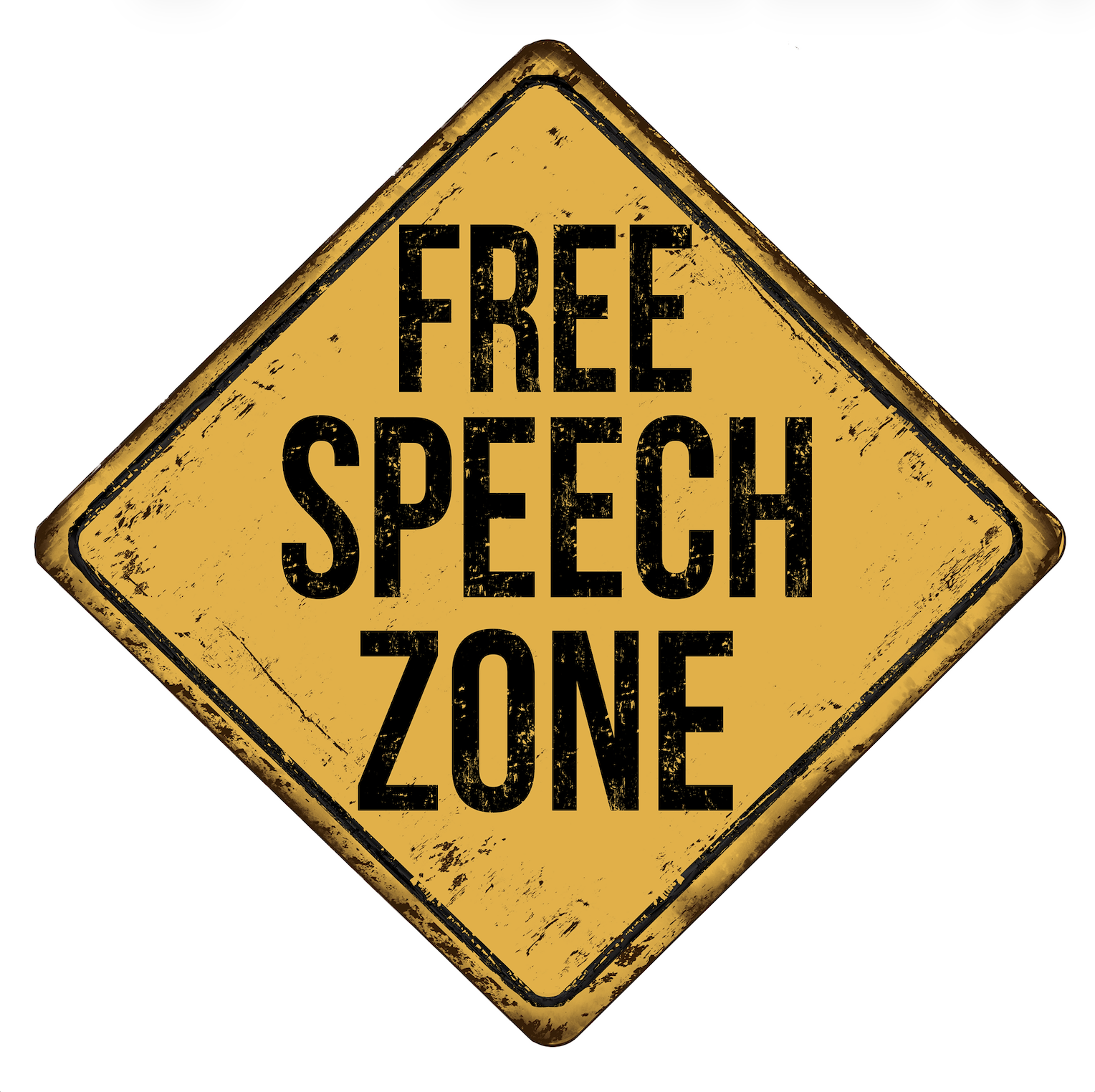
In a significant development, the Supreme Court’s unanimous decision in Olivier v. City of Brandon represents a major victory for free speech, religious liberty, and access to the courts. In a 9-0 ruling, the Court reversed lower court decisions that had prevented Gabriel Olivier from pursuing a constitutional challenge to a city ordinance restricting his ability to publicly proclaim his Christian faith outside the Brandon Amphitheater. The Foundation for Moral Law filed an amicus brief in support of Olivier, arguing that the City’s actions infringed on fundamental constitutional rights and that his claims deserved to be heard on their merits.
The dispute arose after Olivier, a Christian street preacher, was ordered to leave a public sidewalk and relocate to a designated “free speech zone” during events at the amphitheater. Although his preaching was peaceful and undisruptive, the ordinance confined him to an area removed from pedestrian traffic and prohibited amplification audible more than 100 feet beyond the designated zone, severely limiting his ability to reach his intended audience.
In our amicus brief, we argued that these restrictions burdened both Olivier’s freedom of speech and his free exercise of religion. Olivier was engaged in the public proclamation of a religious message on public property. An activity that lies at the core of First Amendment protection. There was no evidence that his conduct obstructed traffic, threatened public safety, or disturbed the peace. Nevertheless, the City imposed restrictions that made meaningful communication with his audience virtually impossible.
The case also presented an important question regarding access to judicial review. The lower courts dismissed Olivier’s claims under an expansive interpretation of Heck v. Humphrey, preventing him from challenging the constitutionality of the ordinance. The Supreme Court’s decision ensures that those claims may now proceed.
Beyond the immediate parties, the Court’s ruling reaffirms a fundamental constitutional principle: government may not isolate religious speakers from their intended audience or rely on procedural barriers to avoid judicial scrutiny of potentially unconstitutional actions. The protections of the First Amendment are not confined to government-designated speech zones but extend throughout the public square.
The Foundation is grateful that the Supreme Court unanimously recognized the importance of these issues and restored Olivier’s opportunity to pursue his claims. As the litigation continues, the Foundation remains committed to defending the freedoms of speech and religion that lie at the heart of our constitutional tradition. This decision marks an important step toward ensuring that Americans remain free to publicly express their beliefs and seek redress when those freedoms are infringed.
Recent Posts…

For the better part of a century, religious liberty jurisprudence has been entangled in all manner of judge-made doctrine which, rather than serving the intended effect of simplifying the analysis of Establishment and Free Exercise claims, has led to more confusion, more contention, and ultimately more injury to religious liberty. Though this Court…

The U.S. Supreme Court will consider on November 7 whether to take up the case of former Kentucky clerk Kim Davis, whose refusal to issue marriage licenses to same-sex couples after the court’s 2015 Obergefell v. Hodges decision made her a national figure in the debate over religious liberty and gay marriage. Davis, who was briefly jailed for…
The Foundation for Moral Law has filed an amicus curiae brief in the U.S. Supreme Court in Ermold v. Davis, a case arising from the prosecution of Kentucky clerk Kim Davis, who refused to issue same-sex marriage licenses that bore her name after the Court’s 2015 Obergefell v. Hodges decision. Represented by attorneys…